The hormone it is based on
Growth-hormone-releasing hormone is a forty-four-amino-acid peptide released by the hypothalamus. It acts on somatotroph cells in the anterior pituitary, which respond by releasing growth hormone in pulses. Native GHRH is broken down within minutes by the enzyme dipeptidyl peptidase-4, which is why it is difficult to study directly.
The modification
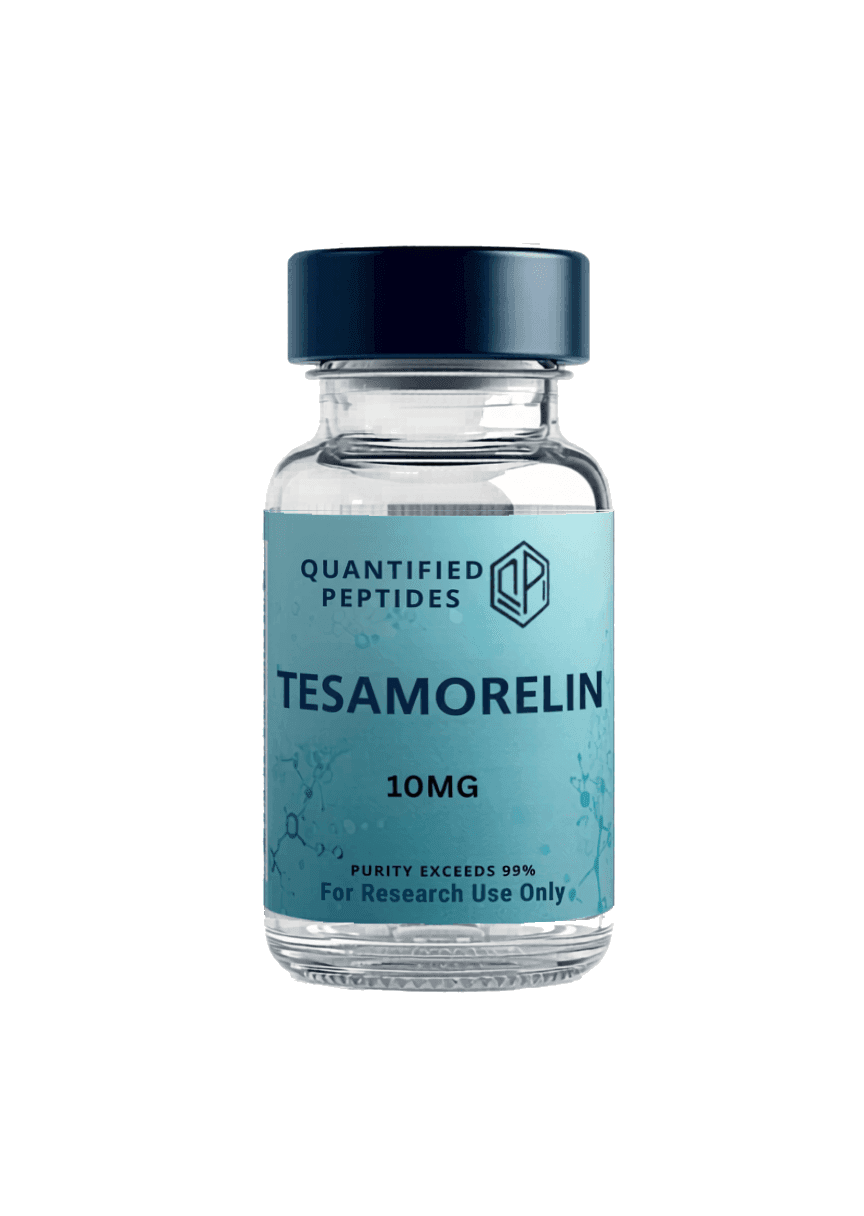
Tesamorelin, developmental code TH9507, keeps the full GHRH sequence and adds a trans-3-hexenoic acid group at the N-terminus. That single addition protects the cleavage site from the enzyme and extends the molecule's stability. Because the sequence is otherwise unchanged, it binds the GHRH receptor in the same way as the native hormone, which makes it a cleaner tool than a heavily altered analogue.
Research models
- Pituitary cell preparations, for receptor binding and growth-hormone release in response to the analogue.
- Rodent endocrine models, for the pulsatile pattern of growth hormone and downstream insulin-like growth factor 1.
- Adipose-tissue and lipid-metabolism models, where the downstream effects of growth-hormone signalling on fat metabolism are examined.
GHRH analogues and secretagogues
Tesamorelin acts at the GHRH receptor. A separate class of compounds, the growth-hormone secretagogues such as ipamorelin and GHRP-6, act at a different receptor, the ghrelin receptor, to produce a related effect by a different route. Research preparations that pair a GHRH analogue with a secretagogue exist to study the two pathways together; on this site the tesamorelin and ipamorelin blend is supplied as a single vial with both components listed.
Regulatory note and handling
Tesamorelin has been approved in some jurisdictions as a prescription medicine for a specific indication. That approval belongs to the sponsor's product; the research material supplied here is not that product and is not approved for any therapeutic use in Australia. It is supplied lyophilised in 10 mg and 20 mg specifications for in-vitro research only.
Products in this guide
Supplied strictly for in-vitro laboratory research. Not for human or animal use. Not approved by the TGA or any regulator for therapeutic use. Nothing in this guide is advice on use, dose or outcome.