From single to triple agonists
Incretin research began with molecules that act at a single receptor, the GLP-1 receptor. Dual agonists followed, adding the GIP receptor. Retatrutide belongs to the next generation: a single peptide engineered to activate the GLP-1, GIP and glucagon receptors. Each receptor sits on different tissues and couples to different intracellular signals, so a molecule that reaches all three is a tool for asking how those pathways interact rather than how one behaves alone.
The three receptors
- GLP-1 receptor: a G-protein-coupled receptor expressed in the pancreas, gut and brain, studied for its role in insulin secretion and appetite signalling.
- GIP receptor: a related receptor expressed in the pancreas and adipose tissue, studied for its effects on insulin response and lipid handling.
- Glucagon receptor: expressed chiefly in the liver, studied for its role in energy expenditure and hepatic glucose output.
How the molecule is built
Retatrutide is a synthetic peptide with a modified backbone and a fatty-acid side chain. The side chain binds albumin in circulation, which extends the molecule's half-life in the models it has been studied in. The receptor-binding portion is engineered so that a single sequence has measurable affinity at all three receptors, with the balance between them tuned deliberately during development.
Where it appears in the literature
The compound has been characterised in receptor-binding assays, in cell lines expressing each receptor individually, and in rodent metabolic models. It has also been the subject of clinical trials run by its developer. Those trials are the developer's work under regulatory oversight; a research supplier's product is not part of them and makes no claim from them. Retatrutide is not approved for any therapeutic use in Australia.
Handling
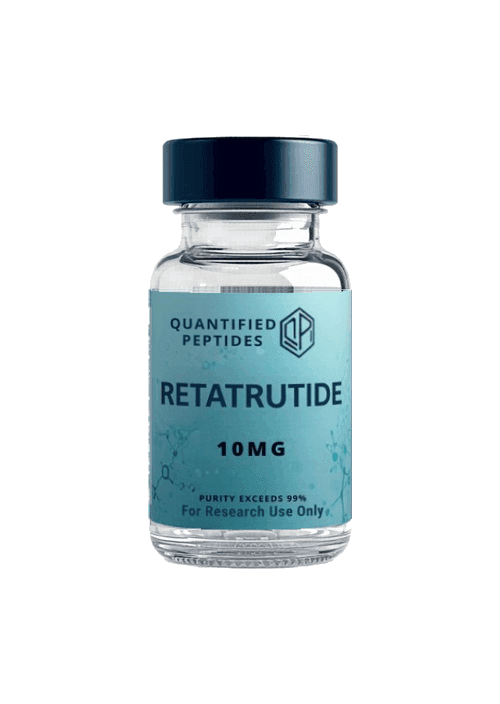
Retatrutide is supplied lyophilised in 10 mg to 60 mg specifications, stored frozen, dry and dark, and reconstituted in the laboratory. It is supplied for in-vitro research only.
Products in this guide
Supplied strictly for in-vitro laboratory research. Not for human or animal use. Not approved by the TGA or any regulator for therapeutic use. Nothing in this guide is advice on use, dose or outcome.