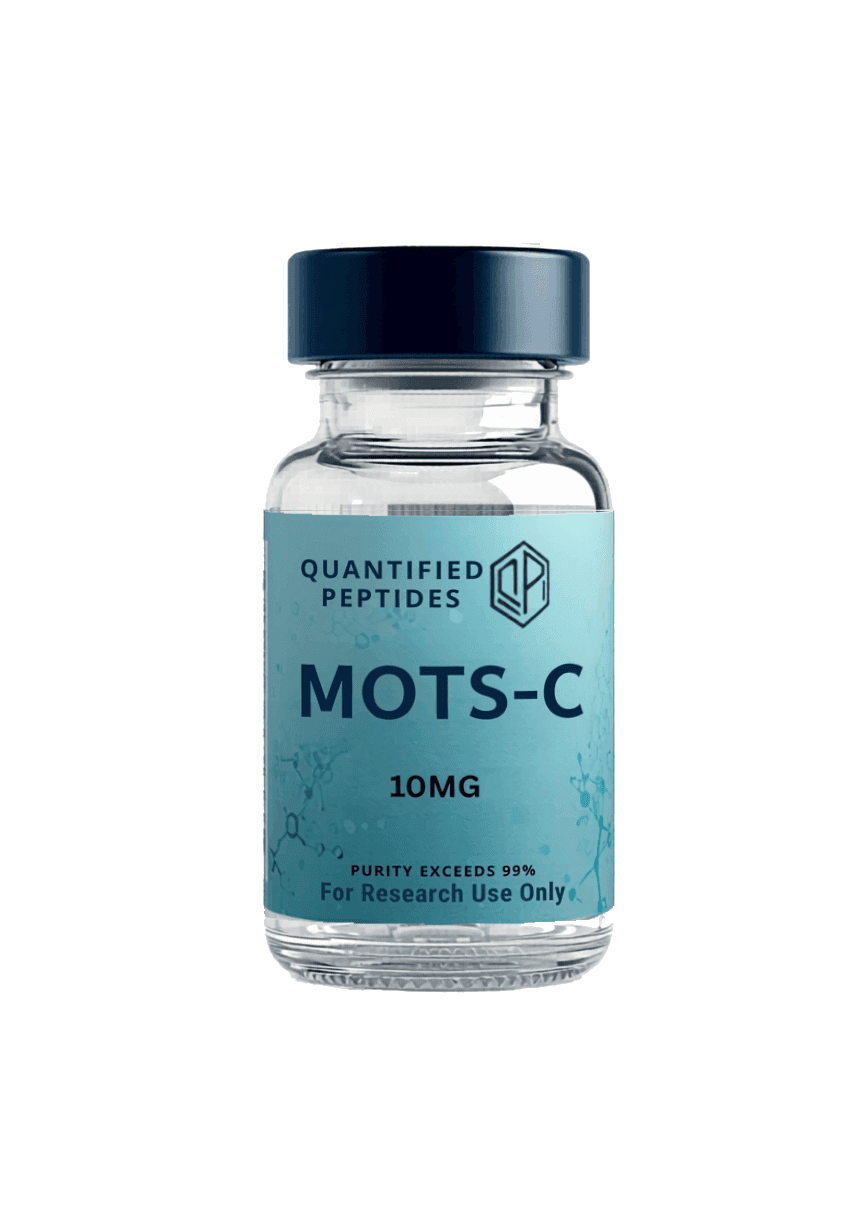
A peptide from the mitochondrial genome
MOTS-c, mitochondrial open reading frame of the 12S rRNA type-c, is a sixteen-amino-acid peptide encoded within the mitochondrial 12S ribosomal RNA gene. Its discovery added to a small class of mitochondrial-derived peptides, molecules that show the mitochondrion is a signalling organelle and not only a power plant.
The pathway it is studied in
The literature places MOTS-c in the folate-methionine cycle and, downstream of it, in the activation of AMP-activated protein kinase. AMPK is a central energy sensor: when a cell's energy state falls, AMPK activity rises and shifts metabolism toward energy production. Studies have examined whether MOTS-c raises AMPK activity in muscle cells and what happens to glucose uptake and fatty-acid metabolism when it does.
A second line of work looks at MOTS-c moving into the nucleus under metabolic stress and influencing gene expression there, which would make it a messenger between the two genomes of the cell.
Models used
- Cultured skeletal muscle cells, for AMPK activation and glucose uptake.
- Rodent models of diet-induced metabolic change, for whole-organism metabolic measurements.
- Ageing models, because circulating levels of the peptide have been reported to fall with age in the organisms studied.
Handling
MOTS-c is supplied lyophilised in 10 mg and 40 mg specifications, stored frozen, dry and dark, and reconstituted in the laboratory. For in-vitro research only.
Products in this guide
Supplied strictly for in-vitro laboratory research. Not for human or animal use. Not approved by the TGA or any regulator for therapeutic use. Nothing in this guide is advice on use, dose or outcome.