The three things that degrade a peptide
- Water. Hydrolysis breaks peptide bonds, and deamidation alters asparagine and glutamine residues. Both need water, which is why the dry powder is stable and the solution is not.
- Oxygen and light. Methionine, cysteine and tryptophan residues oxidise, and light accelerates the reaction. Amber vials and dark storage exist for this reason.
- Heat. Every one of the above reactions runs faster at higher temperature. Freezing slows them to a crawl.
Reading the storage line
A listing on this site states a condition such as minus twenty degrees, keep dry, avoid light. The temperature is for the sealed, lyophilised vial. Keep dry means the vial should not be opened until it has reached room temperature, so that condensation does not form on the cold powder. Avoid light means the vial should be stored in its box or in an opaque container, not on an open shelf.
Powder versus solution
Lyophilised peptide, sealed and frozen, is stable for months and often longer. Once reconstituted the same peptide should be treated as perishable: refrigerated, used within a period of days to weeks depending on the sequence, and never subjected to repeated freezing and thawing. Laboratories that reconstitute more than they will use immediately divide the solution into single-use aliquots and freeze those.
Storage and our replacement promise
We replace or refund a product that arrives damaged or wrong. We cannot replace or refund one that has been stored outside the conditions on its listing, or reconstituted with a diluent we did not supply; that is at the laboratory's own risk. Follow the storage line and the steps below, and keep the vial sealed until it is needed. The full wording is in the terms of sale.
Organising storage
- Keep vials sealed in their original packaging until use. A replacement cap on an opened vial is for the working solution, not for long-term storage.
- Label everything with the compound, the specification, the date received and, once reconstituted, the date and concentration.
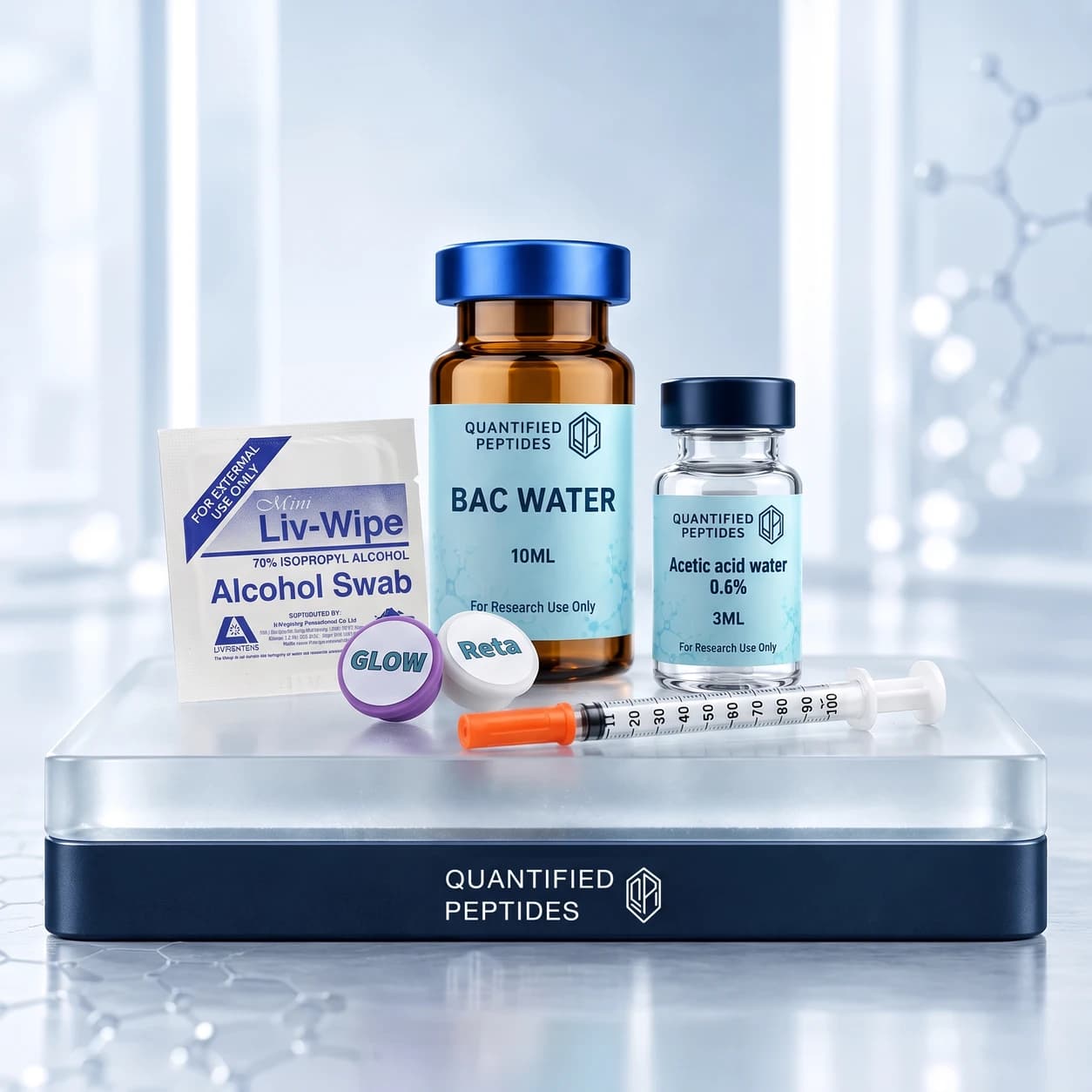
- Store diluents at room temperature, away from light. Bacteriostatic water does not need refrigeration before it is opened.
- Note that shipping conditions are short exposures. A vial that travelled at ambient temperature for a few days is within the tolerance the lyophilised form was designed for; a vial left warm for months is not.
Products in this guide
Supplied strictly for in-vitro laboratory research. Not for human or animal use. Not approved by the TGA or any regulator for therapeutic use. Nothing in this guide is advice on use, dose or outcome.